Home / Blog / 5 Steps to Implement Referral Marketing in All Types of Business
Supporting workplace friendships on remote teams

By EKbana on October 12, 2021
17 min read
The term “Internet of Things”, commonly abbreviated as (and substituted with) IoT has been with us since 1999 and Kevin Ashton; who coined the term; himself agrees the term has evolved to grow to a much wider context than he originally meant. However the central theme of IoT, which he clarifies in the 2009 article on RFID Journal to be something that “enables computers to observe, identify and understand the world” and something that would be “able to track and count everything, and greatly reduce waste, loss and cost” using sensors remains fairly the same.
The idea was around since at least 1991 and gained popularity through the Auto-ID Lab at MIT(formerly known as Auto-ID Center which Kevin himself had cofounded).
of Things in modern terms is commonly understood as a network of physical devices that are connected to the Internet for collecting and sharing data. The interrelated devices may be mobile, computing devices, electromechanical or digital equipment, embedded systems or more commonly a source of raw data (such as sensors) or any embedded electronics that can transfer data over a network. The connections between the components enable then for real-time communication to automate decision making with minimal (and convenient) human involvement.
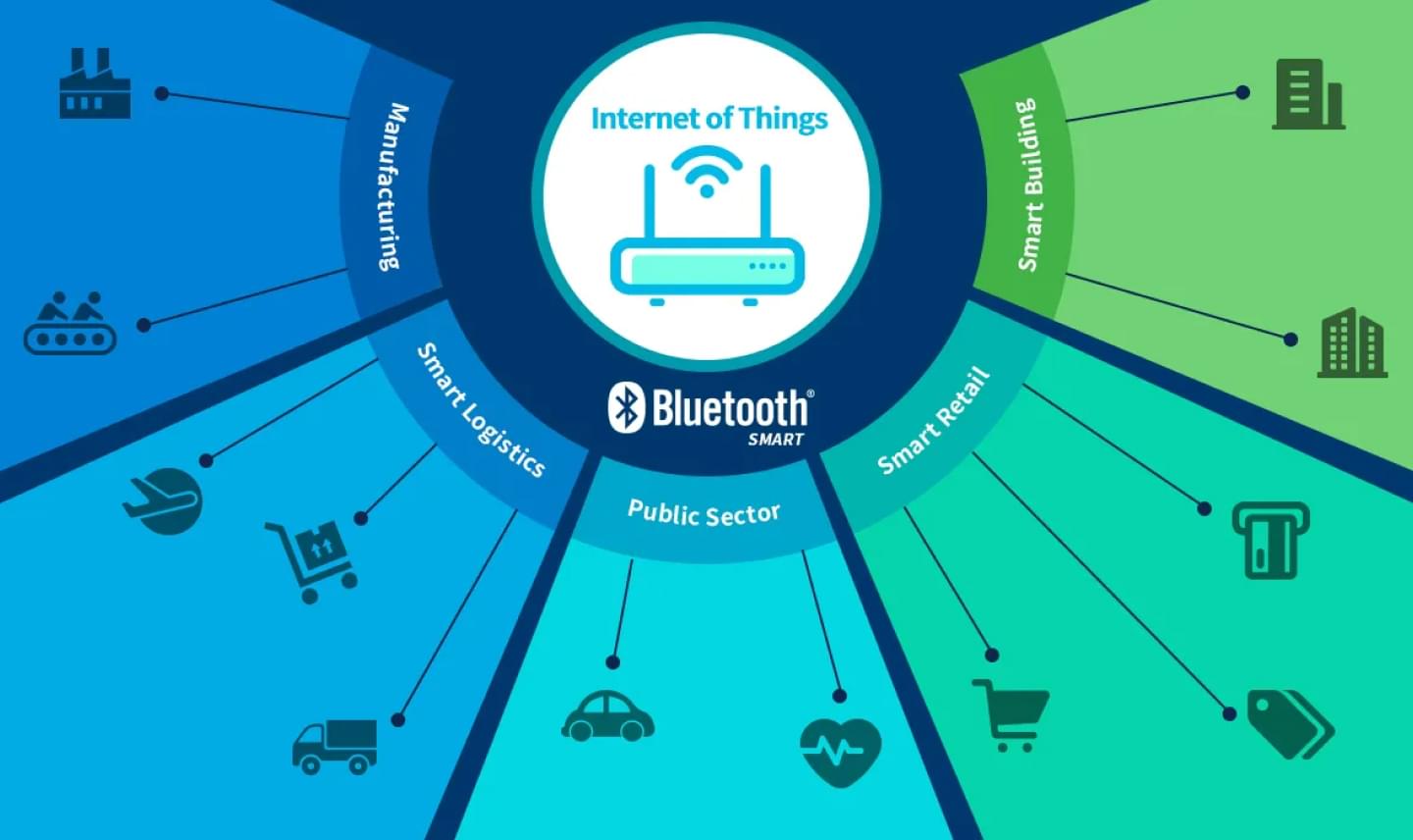
IoT is more than just a machine-to-machine (M2M) communication but could be thought of as convergence of M2M communications and data analytics/machine learning algorithms over the huge data thus gathered. This pipeline can then be applied to automate processes and decision making. M2M communications are generally simpler and less intelligent. Example of M2M communication could be vending machines, ATMs, smart meters or medical-equipments that send out information of inventory or dispensed cash or other similar measurements or interactions. The notable difference is that M2M networks are exclusively used to allow machines, sensors and controllers to communicate however in case of IoT, the same network is used by humans (via phones, tablets, computers). It is necessary to understand the degree of connectedness here and to distinguish the nuances of connected devices, interconnected devices and intelligently connected devices. IoT based systems are more commonly understood as “smart” systems, such as “smart-industry”, “smart-home”, “smart-parking” and so on. Owing to the growth of wireless technology and the Internet becoming more accessible every day and also more devices getting “smarter”, the IoT technology and industry is growing at an unprecedented scale. International Data Corporation (IDC) says the market for worldwide IoT solutions will go from $1.9 trillion in 2013 to $7.1 trillion in 2020.
Predictions have been made that potential for growth from implementing Industrial IoT may generate around $12 trillion of global GDP by 2030. According to predictions made by Microsoft (on IoT signals report 2019), 94% of businesses will be using IoT by the end of 2021. The predictions were based on a research survey conducted with over 3,000 decision-makers at the top enterprise companies involved in IoT from all over the world. The report says that 87% of decision-makers in manufacturing are already adopting some IoT and the percentage is 90%, 86% and 83% in retail/wholesale, transportation and government respectively. The same report also emphasizes that the continued success of IoT will also rely on other innovations such as AI, edge computing and 5G. According to the report, companies adopt commercial IoT for operations optimization (56 %), followed by employee productivity (47%), and safety and security (44 %). Microsoft says “There will be more than 20 billion connected devices by 2020, but IoT is more than just your smart speaker and thermostat. Connected devices can save energy in smart buildings, improve the flow of traffic in congested cities, increase crop yields, prevent equipment failures on a factory floor, and power medical breakthroughs.”
Though IoT is something discussed a lot about, it’s precise implementation model is widely debated one. Part of the reason is that IoT systems are complex and varied and IoT solutions are mostly specific to a situation that needs to be addressed. However, in general, a typical IoT system includes the following key components.
Sensors/Devices Connectivity Data Processing User Interface
An IoT system consists of sensors/devices which talks to the data
cloud through some kind of protocol and commonly used network
connectivity. The software that processes the cloud-data
automatically makes decisions and sends commands to the
sensors/devices and other notifications/alert to relevant nodes or
human users. There could be few exceptions to such connectivity
schemes in cases where the communication latency could create
serious to human or other similar fatality such as in a self-driving
car at emergency conditions or the communication is too expensive or
the data is mostly trivial (such as a security camera footage of an
empty hallway). In such a case, computing may be done on a gateway
or on the sensor/device itself (edge computing). A user can
intervene or monitor the whole process using an interface provided
in the IoT platform. User can also apply situation-specific data
aggregation, visualization or decision-making methods to data in
case of necessity using the IoT platform’s user interface.
IoT Use cases
IoT has a wide and unparalleled use case at a different hierarchical level. From making and individual consumer’s day to day experience more convenient by turning the thermostat on or off, to irrigating the agriculture farm automatically based on weather and sensor data, to automate manufacturing process, in fault / defect identification and early failure detection, components wear-out identification and decision making in redesigning manufacture plant, IoT could have a key role. Condition-based maintenance could replace scheduled maintenance in industries.
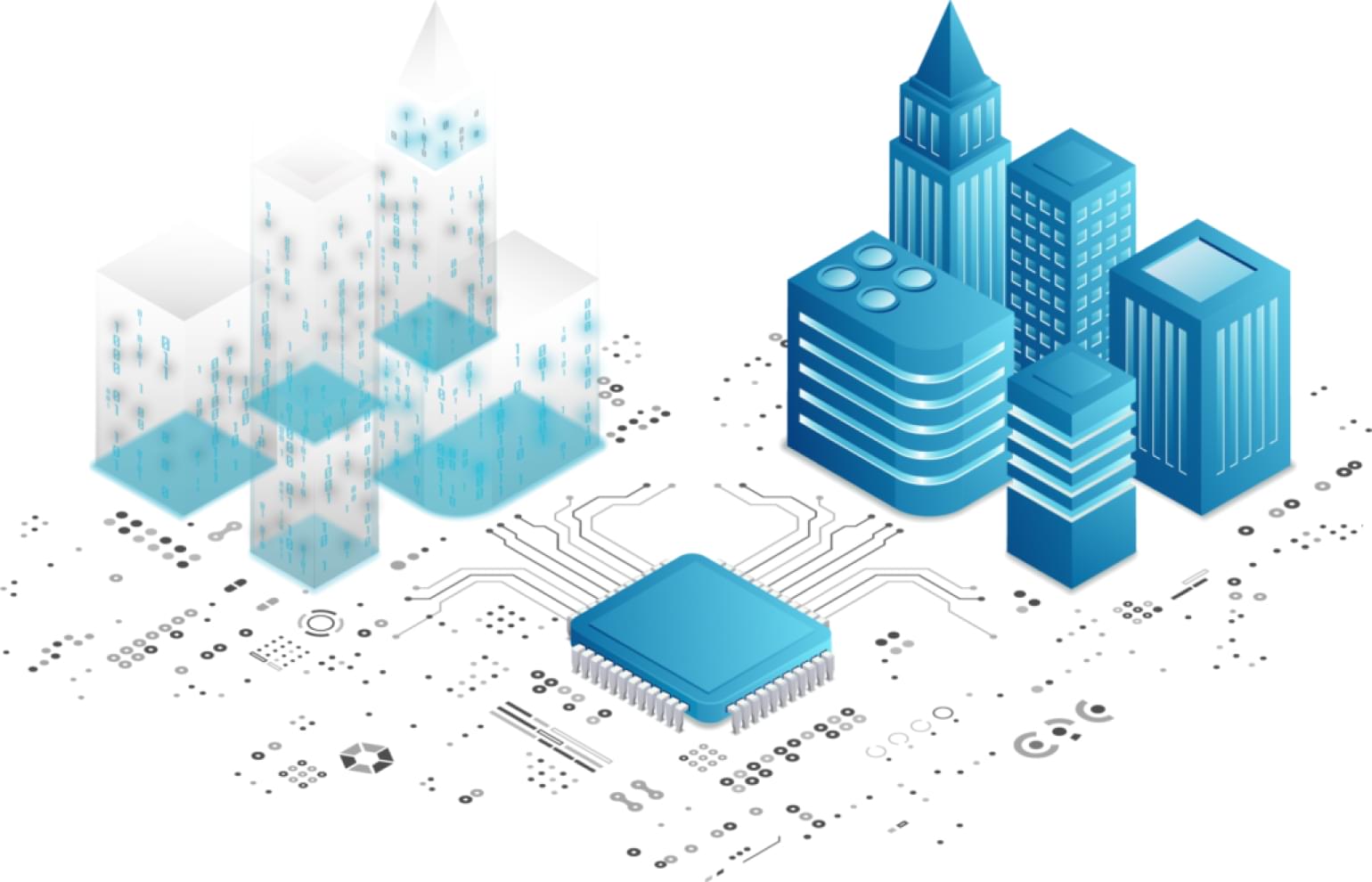
Smart farms including grapevines to marijuana plants, sensors have offered deep insight on crop production. IoT can assist decision-makers and designers to decide new features on a car based on consumer behaviour, response and usage of existing features, failure data, accident patterns or notify doctors or relatives about increased blood pressure or heart rate or alert of fire and respond to it. Tesla was once able to complete a mandated fix of charger plugs on more than 29000 vehicles via a software IoT, which wouldn’t have been possible without getting the car connected to the internet. In another case, by rigorously collecting, aggregating and analyzing patient data, Medtronic (world’s largest medical device company) has been able to deliver the personalized care coordination to over 95,000 individuals. IoT can connect power grids over the city or country, pipelines, and irrigation canals. In large scale, IoT and IoT data can be used in urban planning, transportation and management, security, agriculture, disaster warning and management and so on. The key use and potential use cases of IoT as listed by Microsoft is listed here.
Remote work has undoubtedly impacted workplace friendships, with these relationships either becoming more difficult to form and maintain, or in fact more tight-knit and exclusive.
manufacturing
- Industrial automation
- Quality and compliance
- Production planing and scheduling
- Supply chain and logistics
- Plant safety and security
Retail/wholesale
- Industrial automation
- Quality and compliance
- Production planing and scheduling
- Supply chain and logistics
- Plant safety and security
Beside the categorical list by Microsoft, IoT could be has wide applications in smart homes, wearables (gears, glasses, watches, clothes), tracking and delivery systems, office automation, smart grids, smart retail, warehouse management, smart farming and precision agriculture, traffic management and automation, self-driving transportation systems and many more.
Closing remarks
The growth of IoT is evident and companies in all industries are looking for ways to leverage IoT. However, IoT could be fruitless without enough data-analytics capabilities and could even pose security threats and serious privacy concerns without a proper way to manage and secure data.
Certainly, the technologies of the Internet of things such as RFID and sensor make our life better, easier and more comfortable. With IoT’s contribution in saving and optimizing energy and water usage, monitoring water and other natural resources, alerting of wildfire and other hazards, strategists are planning to leverage IoT to achieve sustainable development goals for 2030.
Reference
We’re empowering business growth for our clients. Take the first step towards growth today.
Get ProposalMore From Ekbana
 See All Insights